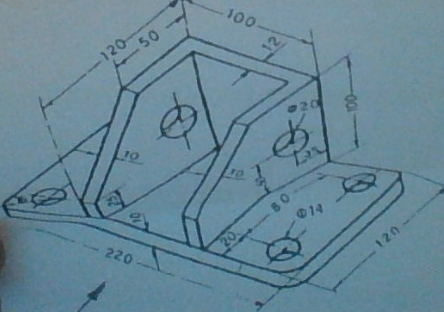
Draw the front view and right view and the
Draw the front view and right view and the down-view.
Expected delivery within 24 Hours
how do we in the united states measure social moblitiy how does social class and life chance play out in social
the resistivity of the body is a good measure of its overall composition a measure of the resistance of the upper arm
rapture corporation had the following transactionsclassify each of these transactions by type of cash flow activity
evaluate the positive and negative effects of affirmative action in the united states target current issues trends and
draw the front view and right view and the
after the accounts are closed on july 3 2008 prior to liquidating the partnership the capital accounts of ann daniels
a wheel rotates with a constant angular acceleration of 375 rads2 assume the angular speed of the wheel is 220 rads at
discuss the concept of equality do you see equality happening in our society why or why notno words
jones company had 100 units in beginning inventory at a total cost of 10000 the company purchased 200 units at a total
1929825
Questions Asked
3,689
Active Tutors
1443379
Questions Answered
Start Excelling in your courses, Ask a tutor for help and get answers for your problems !!
Review section 2.2 about the various research methods used by sociologists, then address the following questions.
Question: Which statement is true regarding psychometrists? Need Assignment Help? Question options:
In conclusion, the problem space identification process requires rigorous literature synthesis, external validation, and structured argumentation to establish
Erikson believed that people go through eight stages of psychosocial evolution that is termed psychosocial development
Question 1: Compare and contrast student-centered learning to teacher-centered learning.
The concepts of being genuine, having a positive regard for, and seeing clients as having basic goodness and an internal capacity for self-growth
Answer this question with detailed references in paragraph format: What is countertransference, and how does it impact the therapeutic relationship?