--%>

Price elasticity and market power

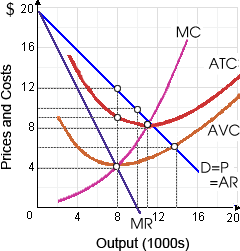
The price elasticity of demand equals one when this firm produces where total revenue is: (i) $72,000 per period. (ii) $80,000 per period. (iii) $96,000 per period. (iv) $100,000 per period. (v) $144,000 per period.
1027_Price Discrimination.png

Hey friends please give your opinion for the problem of Economics that is given above.

   Related Questions in Microeconomics

  • Q : Setting price and produces an output

    Assume that Babble-On’s patents for speech-translation software covering 314 languages lapsed, as well as entry of new competitors within this market eroded the demand for Babble-On software, but the firm retains several market powers since competitors’ pr

  • Q : Marginal revenue of purely competitive

    When boosting output by hundred units raises total revenue by $1200, in that case a purely competitive firm’s marginal revenue the same as: (w) $1,200. (x) $120. (y) $12. (z) $120,000. I need a good answer on

  • Q : Standard of Income Distribution

    According to the requirements standard of income distribution: (w) marginal productivity is easily measured. (x) people’s needs are proportional to their marginal products. (y) income must be distributed in proportion to people’s needs. (z

  • Q : Demand Curve when price is cut I have a

    I have a problem in economics on Demand Curve when price is cut. Please help me in the following question. When the price of Snapple is cut, then: (1) The lower quantity of Snapple is demanded. (2) A bigger quantity of Snapple is demanded. (3) Demand for the Snapple r

  • Q : Practicing joint profit maximization A

    A cartel is: (w) any large multinational corporation like OPEC. (x) a group of oligopolists practicing conscious parallelism of action. (y) a group of firms which practices joint profit maximization. (z) a multinational firm along with government subs

  • Q : Define Optimal Sample Size Optimal

    Optimal Sample Size: The optimal or suitable size of sample in a survey or poll is the function of four discrete factors: 1. Size of the population: The size of the

  • Q : Help The problem of asymmetric

    The problem of asymmetric information is that: a) neither health care buyers nor providers are well-informed. b) health care providers are well-informed, but buyers are not. c) the outcomes of many complex medical procedures cannot be predicted. d) insurance companies are well-informed

  • Q : Accepting prevailing market price by

    Unlike firms along with substantial market power, price takers: (w) control the prices of purchases or sales, but not their quality. (x) have no choice but to accept the prevailing market price. (y) adjust output and price to maximize profit. (z) are

  • Q : Majority of surviving below the poverty

    In the United States, a mainstream of those living below “the poverty line”: (1) have televisions, automobiles, main appliances, and other amenities possessed only by the wealthy [when anyone] in earlier times and nowadays, only by the wea

  • Q : Hike in relative price of a good I have

    I have a problem in economics on Hike in relative price of a good. Please help me in the following question. The hike in relative price of a good will quickly increase the: (i) Quantity demanded. (ii) Market supply. (iii) Rate of inflation. (iv) Quant