--%>

Nonexistent market supply and power

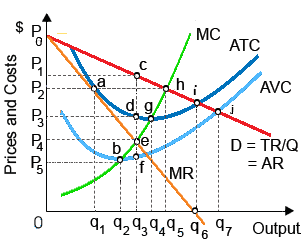
HoloIMAGine has patented a holographic technology which creates 3-D photography obtainable to consumers. There is a market supply curve for HoloIMAGine technology: (w) nonexistent since price-maker firms simultaneously set prices as well as quantities depend on the structures of market demands and their own costs. (x) perfectly price elastic at a price of P1. (y) equal to the marginal cost [MC] curve above point b. (z) perfectly price inelastic at quantity q3.
1062_Market Power1.png

Can anybody suggest me the proper explanation for given problem regarding Economics generally?

   Related Questions in Microeconomics

  • Q : Arising of natural monopolist Natural

    Natural monopolies arise due to: (w) artificial barriers to entry. (x) contestable markets. (y) price discrimination. (z) natural barriers to entry. I need a good answer on the topic of Economics p

  • Q : Open Shop-union membership Firms which

    Firms which employ workers devoid of needing any form of either union membership or dues are the: (i) Agency shops. (ii) Laissez-faire shops. (iii) Union shops. (iv) Closed shops. (v) Open shops. Can someone please help me in findi

  • Q : Estimating N.I. by product by value

    Describe the steps taken in estimating N.I. by product/ value added technique? Answer: A) Classify all production units: Locate

  • Q : Difference between planned and actual

    Differentiate between planned and actual saving and investment. Answer: There is a big difference between (a) planned S and I and (b) Actual saving and investment.<

  • Q : Problem on Rational Ignorance Not

    Not learning the whole thing possible regarding someone prior to you marry them is an illustration of: (i) Adverse selection. (ii) Moral hazard. (iii) Economic dishonesty. (iv) Blind indifference. (v) Rational ignorance. Choose the

  • Q : Profits and Losses in firms Of all the

    Of all the profits made by the U.S. firms, corporations account for regarding: (1) Less than 10 percent. (2) Between 10 percent and 20 percent. (3) Between 20 percent and 40 percent. (4) More than 40 percent. Can someone please hel

  • Q : Divide future income by one plus

    To discount income which will be received in one year from the interest rate, we: (w) multiply the future income by the interest rate. (x) divide the future income by the interest rate. (y) divide the future income by (1 + the interes

  • Q : Equality between marginal revenue and

    A profit-maximizing monopolist which does not price discriminate and that faces a demand curve that is higher at some output levels than is the firm’s average variable cost curve finds out price and quantity where: (w) profit pe

  • Q : Problem regarding to trade barriers for

    When the import market was within equilibrium before the Japanese government began subsidizing all autos exported by the amount dg, in that case U.S. car buyers would be: (w) pay P2 for a car previouslszy priced at P0. (x) suffer Q0 to

  • Q : Price elasticity of demand I have a

    I have a problem related to price elasticity of demand. The question is illustrated as "After the price of movie tickets rose, I spent less money on movie tickets." What can you infer regarding my price elasticity of demand?