--%>

Maximizes profit at total economic of profit or loss

When the wholesale price P = $8 per bushel of peaches, it purely competitive peach orchard maximizes profit via producing ___ bushel of peaches at a total economic of profit or loss of $___. (i) zero; loss; -$4,000. (ii) 3000; loss; -$3,000. (iii) 3000; profit; $3,000. (iv) 4000; profit; $9,000. (v) 4000; profit; $4,000.
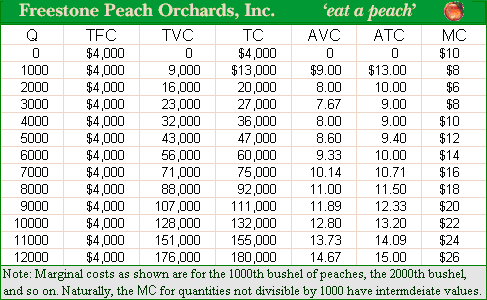
174_Profits and Losses1.png

Can anybody suggest me the proper explanation for given problem regarding Economics generally?

   Related Questions in Microeconomics

  • Q : Amount of output supplied and price

    The amount of output supplied is exactly proportional to the price therefore the price elasticity of supply equivalents one into: (w) Panel A. (x) Panel B. (y) Panel C. (z) Panel D.

    Q : Equilibrium price in the short run The

    The equilibrium price for Christmas trees in the short run is: (w) P1. (x) P2. (y) P3. (z) P4.

    Q : Price discriminate by monopoly firms

    Monopoly firms which can’t price discriminate: (a) are generally forced to shut down into the long run. (b) find this impossible to bar entry by new competitors within the long run. (c) by producing maximize profit where average

  • Q : Equality between marginal revenue and

    A profit-maximizing monopolist which does not price discriminate and that faces a demand curve that is higher at some output levels than is the firm’s average variable cost curve finds out price and quantity where: (w) profit pe

  • Q : Unambiguously Poverty Poverty is most

    Poverty is most unambiguously: (w) an absolute concept that is easily and precisely defined. (x) more prevalent in North America than elsewhere. (y) the absence of income sufficient to survive in reasonable comfort. (z) a relative concept when poverty

  • Q : Labor union and an unregulated public

    I have a problem in economics on Labor union and an unregulated public utility. Please help me in the following question. While comparing an influential labor union and an unregulated public utility firm like cable TV, both might: (1) Be considered as the monopolists.

  • Q : Explicit Costs of business The Explicit

    The Explicit costs of doing the business would comprise: (i) The value of owner’s time (ii) Depreciation on the company owned truck (iii) The interest that the owner could earn when her savings were not tied up in firm. (iv) Salaries paid to the

  • Q : Spread of wage information The

    The Employers frequently discourage the spread of wage information since they fear that: (i) Lower salaried workers might use the information to negotiate the raises. (ii) Firms honor employee’s privacy only when secrecy is reciprocated. (iii) Unions try to orga

  • Q : When price elasticity rise Price

    Price elasticity of demand for a good will tend to rise as the: (i) Number of reasonably good replacements available rises. (ii) Consumer income level rises. (iii) Good is a less significant budget item. (iv) Time permitted for response reduces. (v) Elasticity of supp

  • Q : Well-recognized market structure

    Well-recognized market structures do not comprise: (i) monopoly. (ii) monopolistic competition. (iii) oligopoly. (iv) oligarchy. (v) pure or perfect competition. I need a good answer on the topic of Economi