--%>

Market power conduct by a price maker

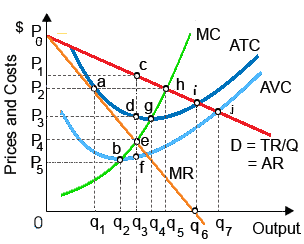
HoloIMAGine has patented a holographic technology which makes 3-D photography obtainable to consumers. The illustrated figure shows such that HoloIMAGine: (1) makes profit equal to area dcP0P3 since this can price discriminate perfectly. (2) has market power as a price maker. (3) faces a perfectly price inelastic market demand curve. (4) has a supply curve that equals the marginal cost [MC] curve above point b. (5) is a quantity-adjusting price gouger firm.
374_Market Power1.png

Can anybody suggest me the proper explanation for given problem regarding Economics generally?

   Related Questions in Microeconomics

  • Q : Statement of Featherbedding I have a

    I have a problem in economics on Resources and Products Flow Model. Please help me in the following question. The featherbedding is: (1) Practiced through only migratory ducks and geese. (2) Practiced through female song birds on each spring. (3) Increasingly substitu

  • Q : Bilateral Monopoly problem I have a

    I have a problem in economics on Bilateral Monopoly problem. Please help me in the following question. The bilateral monopoly is in operation when: (1) The firm is mere employer of some labor force and a union is the mere supplier of the labor for tha

  • Q : Probability of Law of Diminishing

    Can someone help me in finding out the right answer from the given options. Karina gets 27 utils from her first ice-cream cone in an hour, and 23 extra utils from the second that hour. Determine the number of utils is she likely to obtain from the third cone? (i) 15 u

  • Q : Firms demand for labor Assume that the

    Assume that the international auto industry has become monopolistically competitive and you run a small automaker. The events which would not directly influence your firm’s demand for labor comprise: (i) Sales of your company’s most admired car unexpectedl

  • Q : Form of Discrimination The form of

    The form of discrimination which probably causes the smallest problems for income distribution is: (1) occupational discrimination. (2) human capital discrimination. (3) price discrimination. (4) personal discrimination. (5) employment discrimination.

  • Q : Existence of purely competitive farm in

    This purely competitive rose farm would most likely exit in this industry with the long run when the wholesale price per dozen roses fell below: (i) $4.50 per dozen roses. (ii) $5.00 per dozen roses. (iii) $5.50 per dozen roses. (iv) $6.00 per dozen r

  • Q : Relative concept about poverty A

    A predictable reluctance through modern welfare recipients to trade all they own for the material possessions of a rich person by a much earlier period would be evidence which poverty is: (w) easily solved by income redistribution pro

  • Q : Typical purely competitive firm in

    The typical purely competitive firm: (w) is both a price maker and a quantity adjuster. (x) operates within the inelastic range of the demand curve. (y) should decide how much to produce at prices set through the market. (z) tries to maximize total sa

  • Q : Cut in prices of Complementary Goods

    The demand for gasoline would rise rapidly after a fifty percent: (i) Drop in the price of crude oil. (ii) Discovery of main latest oil supplies. (iii) Cut in public transportation fares. (iv) Cut in latest car prices.

    Q : Demand curves rightward of potential

    Monopolistically competitive firms advertise in try to shift their: (1) own supply curves leftward. (2) competitors' costs upward. (3) existing customers' demand curves leftward. (4) tax burdens to resource suppliers. (5) potential customers' demand c