--%>

Illustrate profit or loss on the cost curve graph

A firm's total profit can be computed as all of the given except w) total revenue minus total cost. x) average profit per unit times quantity sold. y) (price minus average total cost) multiply with times quantity sold. z) marginal profit times quantity sold.
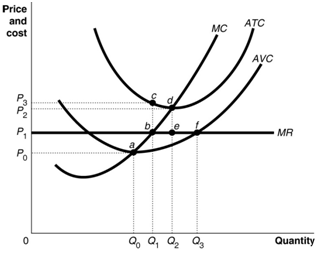
1545_Illustrating Profit or Loss on the Cost Curve Graph.png

How can I solve my economics problem? Please suggest me the correct answer.

   Related Questions in Managerial Economics

  • Q : Explain the Expenditure Method of

    Explain the Expenditure Method of Measurement of Elasticity.

  • Q : Value of the Marginal Product and

    The value to society of the additional output produced by an additional worker is the: (w) marginal resource cost of labor. (x) value of the marginal product of labor. (y) value of the average product of labor. (z) marginal physical product of labor.<

  • Q : Elasticity of supply of labor by

    If the wage rate increases from $10 per hour to $25 per hour, then the elasticity of the supply of labor from this worker is roughly: (1) zero. (2) 7/15. (3) one. (4) minus 8/15.

    Q : Forecasting demand what are the

    what are the criteria for good forecasting

  • Q : Explain the Opinion Survey method of

    Explain the Opinion Survey method of Demand Forecasting.

  • Q : What are the types of price

    What are the types of price discrimination?

  • Q : Free labor in competitive firm When

    When labor was free, in that case this purely competitive firm as in illustrated graph would hire. (1) 600 workers. (2) 700 workers. (3) 800 workers. (4) 900 workers. (5) 1000 workers.

    Q : What are the Methods of Demand

    What are the Methods of Demand Forecasting?

  • Q : Competitive Market Supplies of Labor

    The supply curve of labor which confronts a large but purely competitive industry is usually: (1) horizontal. (2) positively sloped. (3) backward bending. (4) vertical. (5) negatively sloped. Can a

  • Q : Market supply of specialized labor A

    A supply of specialized labor tends to shrink while: (1) the social status of that field rises. (2) an increase in income expectations happens. (3) employment stability increases and training costs decrease. (4) wages rise into a field using similar s