--%>

Determine the level of real output in the short run

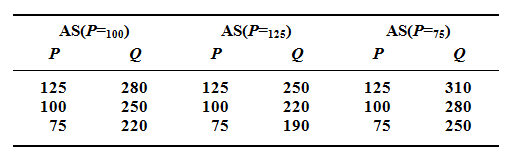
Assume the full employment level of real output (Q) for a hypothetical economy will be $250 and the price level (P) at first is 100. Employ the short-run aggregate supply schedules below to answer the questions that follow:
 

1530_short-run aggregate supply schedules.png

Determine the level of real output in the short run if the price level unexpectedly increase from 100 to 125 due to an increase in aggregate demand? What if the price level drops unexpectedly from 100 to 75 due to a decrease in aggregate demand? Describe each circumstance, using numbers from the table.


E

Expert

Verified

$280; $220. While the price level increase from 100 to 125 [in aggregate supply schedule AS(P100)], producers experience higher prices for their products. Since nominal wages are constant, profits increase and producers raise output to Q = $280. Whereas the price level drop from 100 to 75, profits decline and producers adjust their output to Q = $75. These are short-run responses to changes into the price level.

   Related Questions in Finance Basics

  • Q : Describe Modigliani and Miller theory

    Describe Modigliani and Miller theory of dividends? Describe. The Modigliani-Miller theory of dividends says which dividend theory is irrelevant. They claim that it is the income generated by assets that is significant, not how funds are distr

  • Q : Define Allocation Allocation : The

    Allocation: The distribution of funds or costs from one account or misuse to one or more accounts or appropriations (example, the allocation of employee compensation funding from the statewide 9800 Budget Act items to the departmental Budget Act items

  • Q : What is Non-governmental Cost Funds

    Nongovernmental Cost Funds: For lawful basis purposes, employed to budget and account for revenues other than common and special taxes, licenses, and fees or some other state revenues.

  • Q : Pitfalls when two companies merge Other

    Other than pricing, some pitfalls that consumers might have to deal with when two major companies merge.

  • Q : Describe why measure projects risk as

    Describe why we measure a project's risk as the change in the CV.We measure a project's risk since the change in the coefficient of variation since this focuses on the change in the riskiness of the firm's existing portfolio.

  • Q : Basic determinant of transactions

    Normal 0 false false

  • Q : Effect of merger activity in the

    How has the merger activity in the past decade influenced the concentration of assets in the banking industry? Over the last decade, the number of commercial banks declined through twenty-one percent and the averag

  • Q : What is Bond Funds Bond Funds : For

    Bond Funds: For legal basis budgeting aims, funds utilized to account for the receipt and disbursement of non-self liquidating common obligation bond proceeds. Such funds do not account for the debt retirement as the liability made by the sale of bond

  • Q : What are Staff Benefits Staff Benefits

    Staff Benefits: It is an object of expenditure symbolizing the state costs of contributions for employee’s retirement, health benefits, OASDI, and non-industrial disability leave advantages.

  • Q : Describe risk aversion Describe risk

    Describe risk aversion? Risk aversion is the tendency to ignore additional risk. Risk-averse people will ignore risk if they can, unless they attain additional compensation for letting that risk. In finance, the added compensation is a higher ex