--%>

Analytic time in market structure


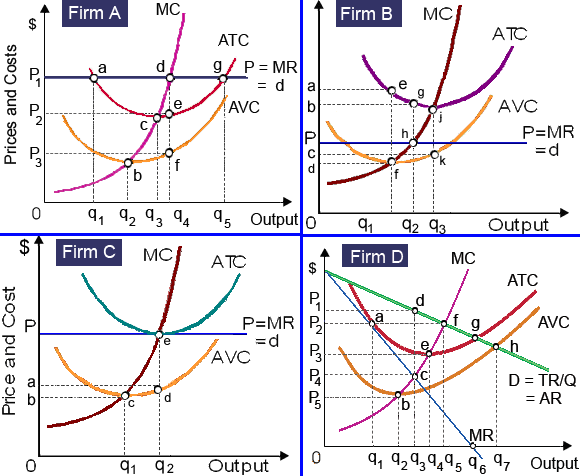
In this figure the firm probably to go out of business the soonest would be as: (w) Firm A. (x) Firm B. (y) Firm C. (z) Firm D.
298_Market Structures.png

I need a good answer on the topic of Economics problems. Please give me your suggestion for the same by using above options.

   Related Questions in Microeconomics

  • Q : Main deficiencies of current welfare

    Not among main deficiencies of the current welfare system is which it sometimes: (w) gives low benefits to the poor relative to total budgetary outlays. (x) collects taxes from the poor to provide benefits to the rich. (y) yields effective marginal ta

  • Q : Higher value for the Gini index A

    A higher value for Gini index tends to be related with: (w) decreases in the equality of the distribution of income or wealth. (x) decreases in the population’s total amount of income or wealth  (y) reduced overall curvature of the Lorenz c

  • Q : Incentives given by higher interest rate

    Higher interest rates give incentives for: (w) a corporation to build a new plant. (x) a family to save more. (y) a family to buy a new house. (z) automakers to produce more new cars. Please choose the right answer

  • Q : Problem on merging firms Elucidate how

    Elucidate how the efficiency might increase when two firms merge? Answer: If the two firms merge, their joined efficiency is expected to enhance owing to:

  • Q : Problem on implicit belief in a moral

    Can someone please help me in finding out the accurate answer from the following question. Assume that when faced with the Faustian option [that is, a deal with the devil] of torturing an naive child in the interest of securing world peace and an end to global hunger,

  • Q : Price elasticity coefficient at

    Every point beside a vertical demand curve (when there was such a thing) would include a price elasticity coefficient equivalent to: (1) 1. (2)  1. (3) zero. (4) infinity. (5)  1/2. Hey friends please giv

  • Q : Poverty and Human Capital Enabling

    Enabling labor to move out of low-wage occupations by enhancing their education, skills, training and mobility, which will tend to: (w) lower the wages of those who leave the low wage occupation. (x) raise the wages of those who remain in the low wage

  • Q : More elastic demand for labor The

    The demand for labor is more elastic the: (i) larger labor costs are like a proportion of total costs. (ii) shorter the time interval considered. (iii) greater the supply of labor. (iv) more difficult this is to substitute one resource for another. (v

  • Q : Estimation of total revenue in specific

    Total revenue can be measured such as area: (1) 0bcq1. (2) 0adq2. (3) 0Peq2. (4) aPed. (5) None of the above.

    Q : Total revenue minus total cost An

    An unregulated monopoly which does not price discriminate maximizes profit at the output level which maximizes: (w) P minus marginal costs [MC]. (x) total revenue minus total cost. (y) marginal revenue [MR] minus marginal costs [MC]. (z) price minus a