--%>

Analysis of Costs and Revenue with Quality

Refer to below figure. Assume that the firm is currently producing Q2units. What occurs if this expands output to Q3units: w) Its profit raises by the size of the vertical distance df. x) this makes less profit. y) this incurs a loss. z) this will be moving toward its profit maximizing output.
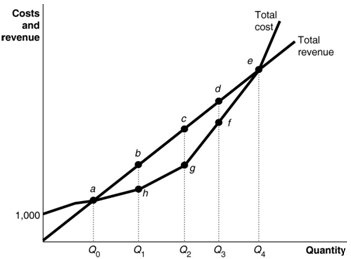
812_Maximizes profits of firm in a perfectly competitive market.png

Can someone explain/help me with best solution about problem of economic...

   Related Questions in Managerial Economics

  • Q : Profit price by earning in Human capital

    As per demonstrated in this graph, there average college graduate will earn around: (1) $12,000 yearly. (2) $20,000 yearly. (3) $45,000 yearly. (4) $90,000 yearly. (5) $100,000 yearly.

    Q : How most goods and resources are

    In countries employing decentralized markets for nearly all decision making: (1) Private individuals select how most resources and goods are allocated. (2) Nonhuman resources should be individually owned. (3) Elaborate economic plans are planned and enforced by law. (

  • Q : Additional wage-elastic of demand A

    A firm’s demand for labor tends to be additional wage-elastic while: (1) the price elasticity of demand for output is greater. (2) substituting capital for labor is harder. (3) unskilled workers join unions. (4) labor costs are

  • Q : Marginal Factor or Resource Costs The

    The words “marginal factor costs” or “marginal resource costs” taken as to the: (w) extra cost involved in producing an additional resource. (x) extra cost involved while producing an additional unit of a resou

  • Q : Diminishing Marginal Productivity of

    Workers tend to be less productive at the margin like they work along with increasingly huge amounts of: (w) physical capital. (x) personal human capital. (y) technology which makes them narrow specialists. (z) labor from other people on an assembly line.

  • Q : Illustrates about the Barometric

    Illustrates about the Barometric techniques?

  • Q : Labor demand increases and supply

    Wages tend to increase while labor demand: (w) and supply both decrease. (x) decreases and supply increases. (y) and supply both raise. (z) increases and supply decreases. Please choose the right answer from above.

  • Q : Illustrates marginal cost pricing and

    Illustrates the marginal cost pricing and differential pricing?

  • Q : Aggregate Supplies of Labor Into the

    Into the short run, the labor supply in an economy based least on: (1) population size and labor force participation rate. (2) individuals’ preferences between leisure and income from work. (3) the demand for labor. (4) rates and structures of w

  • Q : Explain opinion of Stonier and Hague

    Illustrates the opinion of Stonier and Hague for explaining Demand in economics?